Digital Marketing: The Complete Guide to Growing Your Business Online
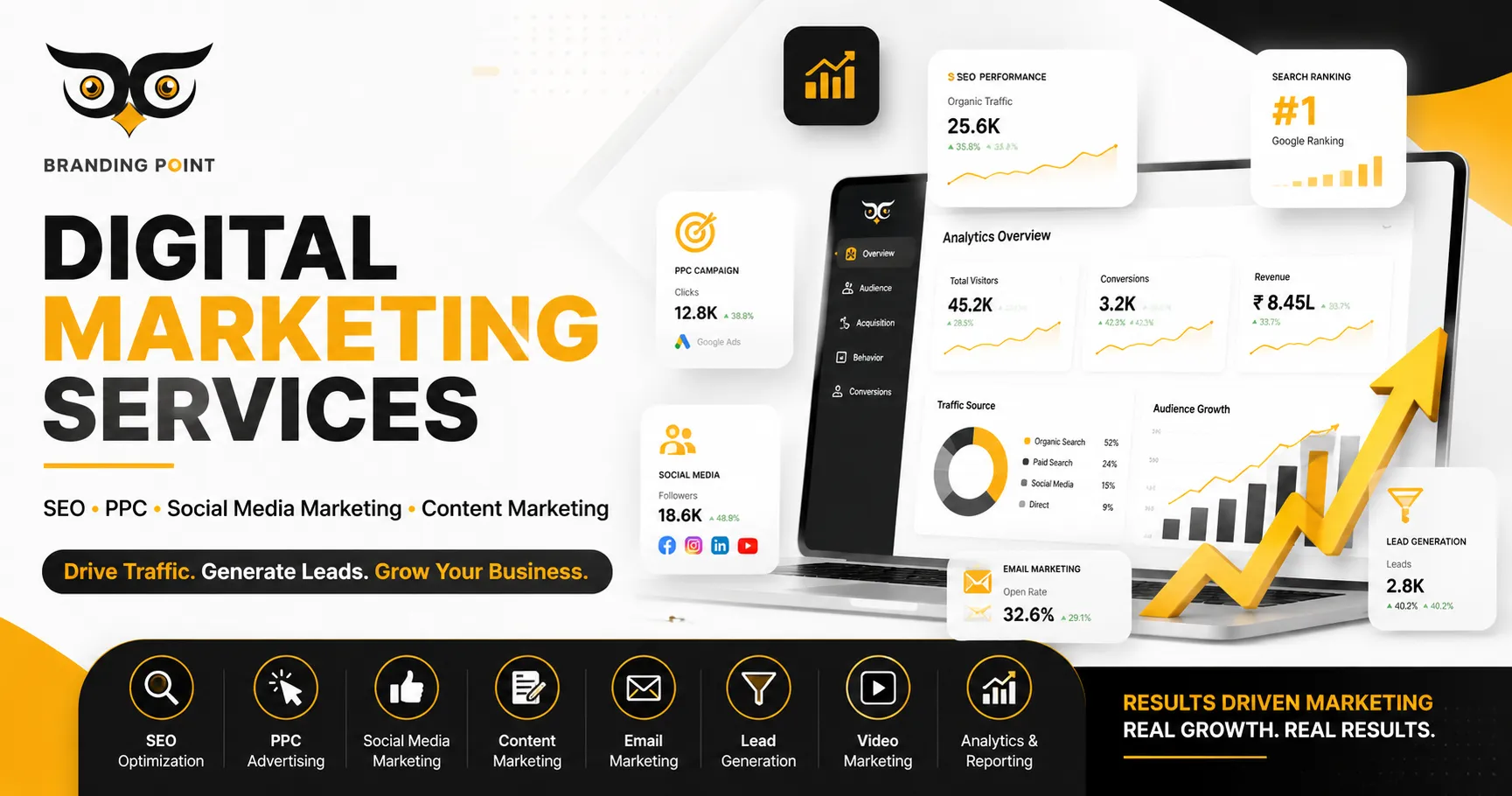
"Digital Marketing: The Complete Guide to Growing Your Business Online"
In today's digital world, having a strong online presence is no longer optional—it's essential. Digital marketing helps businesses connect with potential customers through various online channels such as search engines, social media, email, websites, and mobile applications.
Whether you are a small business owner, startup founder, freelancer, or large enterprise, digital marketing can help you reach your target audience, generate leads, increase sales, and build brand awareness.
What is Digital Marketing?
Digital marketing is the practice of promoting products, services, or brands using digital technologies and online platforms. Unlike traditional marketing methods such as newspapers, television, and radio, digital marketing allows businesses to reach a global audience with measurable results.
Examples of Digital Marketing
Search Engine Optimization (SEO)
Social Media Marketing (SMM)
Content Marketing
Email Marketing
Pay-Per-Click Advertising (PPC)
Affiliate Marketing
Influencer Marketing
Video Marketing
Why Digital Marketing is Important
Businesses of all sizes are investing heavily in digital marketing because it offers numerous advantages.
Benefits of Digital Marketing
1. Global Reach
Businesses can reach customers across cities, countries, and continents without physical limitations.
2. Cost-Effective
Digital marketing campaigns are often more affordable than traditional advertising methods.
3. Measurable Results
Tools like Google Analytics provide detailed insights into website traffic, conversions, and user behavior.
4. Better Targeting
Businesses can target audiences based on:
Age
Gender
Location
Interests
Online behavior
5. Higher Engagement
Digital platforms allow direct communication with customers through comments, messages, emails, and reviews.
Major Types of Digital Marketing
Search Engine Optimization (SEO)
SEO is the process of optimizing a website to rank higher on search engines like Google.
SEO Benefits
Increases organic traffic
Improves website visibility
Builds credibility and trust
Generates long-term results
SEO Components
On-Page SEO
Keyword optimization
Meta titles and descriptions
Internal linking
Content optimization
Off-Page SEO
Backlink building
Brand mentions
Guest posting
Technical SEO
Website speed optimization
Mobile responsiveness
XML sitemaps
Structured data
Social Media Marketing (SMM)
Social media marketing involves promoting products and services on platforms such as:
Facebook
Instagram
LinkedIn
Twitter (X)
YouTube
Pinterest
Advantages
Brand awareness
Customer engagement
Lead generation
Community building
Content Marketing
Content marketing focuses on creating valuable content to attract and retain customers.
Types of Content
Blog posts
Articles
Videos
Infographics
Case studies
E-books
Podcasts
Benefits
Improves SEO
Builds authority
Generates leads
Increases website traffic
Pay-Per-Click Advertising (PPC)
PPC is a paid advertising model where advertisers pay when users click their ads.
Popular PPC Platforms
Google Ads
Facebook Ads
Instagram Ads
LinkedIn Ads
YouTube Ads
Benefits
Instant traffic
Quick lead generation
Highly targeted campaigns
Measurable ROI
Email Marketing
Email marketing remains one of the most effective digital marketing strategies.
Common Email Campaigns
Newsletters
Promotional emails
Product launches
Customer retention campaigns
Benefits
High ROI
Personalized communication
Customer retention
Increased conversions
Influencer Marketing
Influencer marketing involves partnering with social media influencers who have an engaged audience.
Advantages
Increased trust
Wider reach
Better engagement
Enhanced brand visibility
Digital Marketing Strategy
A successful digital marketing strategy includes several steps.
Step 1: Define Your Goals
Examples:
Increase website traffic
Generate leads
Boost sales
Improve brand awareness
Step 2: Identify Your Target Audience
Understand:
Demographics
Interests
Pain points
Buying behavior
Step 3: Build a Professional Website
Your website should be:
Fast
Mobile-friendly
Secure
SEO-optimized
Step 4: Create Quality Content
Publish useful and engaging content regularly.
Step 5: Promote Across Channels
Use:
SEO
Social media
Email marketing
Paid advertising
Step 6: Measure Performance
Track important metrics such as:
Website traffic
Conversion rate
Bounce rate
Cost per lead
Return on investment (ROI)
Latest Digital Marketing Trends
Artificial Intelligence (AI)
AI is transforming marketing through:
Chatbots
Content generation
Predictive analytics
Customer personalization
Voice Search Optimization
More users are searching through voice assistants like:
Google Assistant
Siri
Alexa
Video Marketing
Short-form videos continue to dominate online engagement.
Personalization
Customers expect personalized experiences across websites, emails, and advertisements.
Common Digital Marketing Mistakes
Avoid these mistakes:
Ignoring SEO
Not tracking analytics
Poor website performance
Inconsistent branding
Posting without a strategy
Targeting the wrong audience
Future of Digital Marketing
The future of digital marketing will be driven by:
Artificial Intelligence
Automation
Data-driven decisions
Personalized experiences
Interactive content
Voice and visual search
Businesses that adapt to these trends will gain a competitive advantage in the digital marketplace.
Conclusion
Digital marketing has become one of the most powerful tools for business growth. By combining SEO, content marketing, social media marketing, PPC advertising, and email marketing, businesses can attract more customers, increase revenue, and establish a strong online presence.
Whether you are a startup or an established company, investing in digital marketing is essential for long-term success in the modern digital economy.